


What are pulse variability and biofeedback?
Biofeedback is an effective method for training pulse variability
What is pulse variability, also known as HRV?
Did you know that the heart does not beat regularly like a ticking clock? The heart beats at irregular intervals, and pulse variability is the variation in time between each heartbeat. In English, this is referred to as heart rate variability, but often only the short version HRV is used.
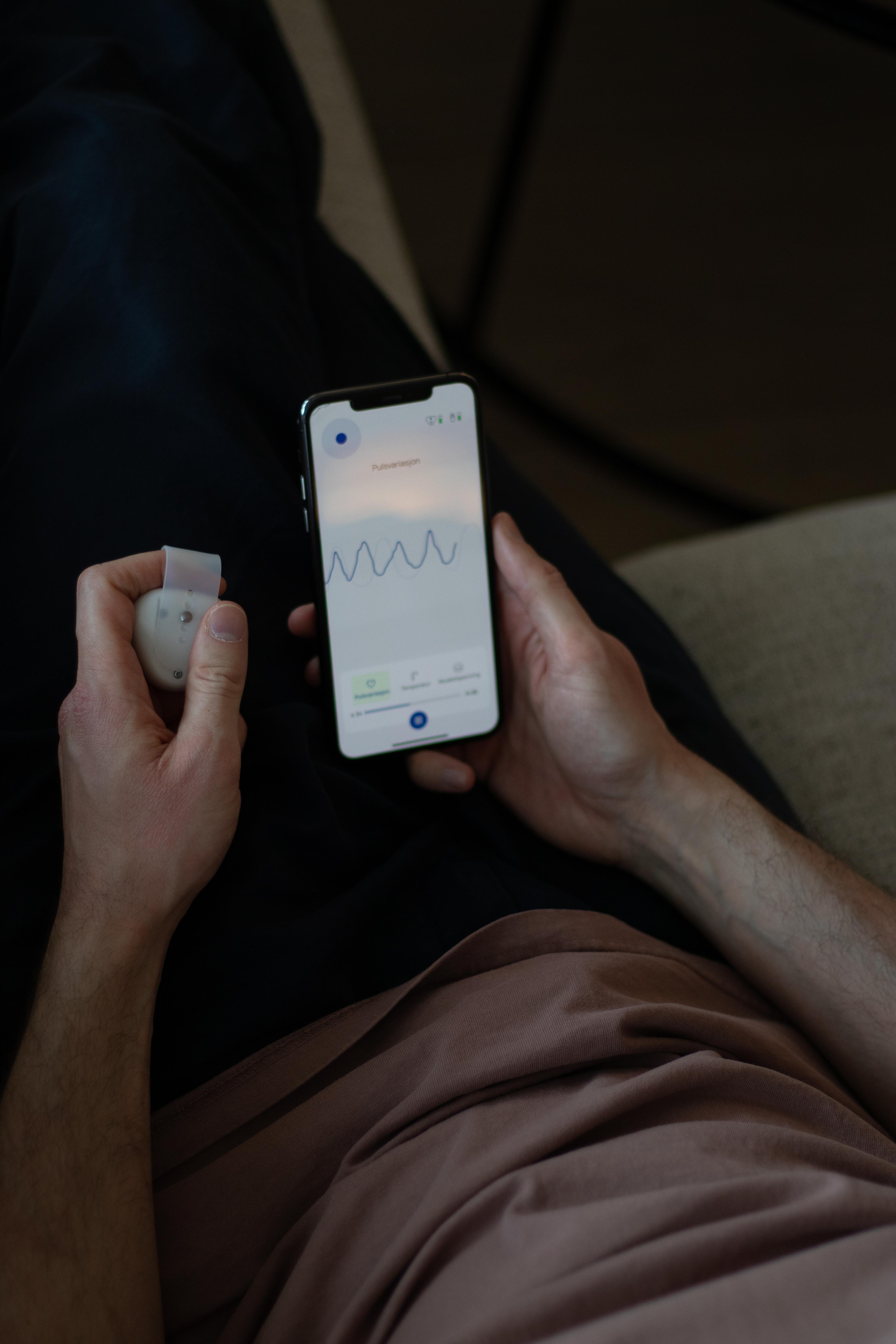
High pulse variability is a healthy sign and indicates that your nervous system is adaptable. High pulse variability does not mean that your pulse rate is high or low, but that your pulse rate follows a natural rhythm. Then the pulse rate goes up and down at regular intervals, in time with breathing.
Low pulse variability is a sign of imbalance in the autonomic nervous system. Pulse variability may be reduced in people with various health challenges, for example with migraines, especially during a migraine attack, but also when you are under stress.
By practicing increasing pulse variability, you can make your nervous system more resilient to stress. Biofeedback is an effective method for training pulse variability.
What is biofeedback?
Biofeedback is a method that helps you gain better control over your body. You use technological equipment that measures things like heart rate, muscle tension, or skin temperature. You get feedback in real time – for example on a screen – so you can see how the body reacts.
When you see how the body behaves, it becomes easier to practice calming down or adjusting your reactions. Over time, new bodily reaction patterns will be automated in everyday life. It can make you less stressed, give you better sleep, reduce pain and help against tension in the body.